When breathing gets hard
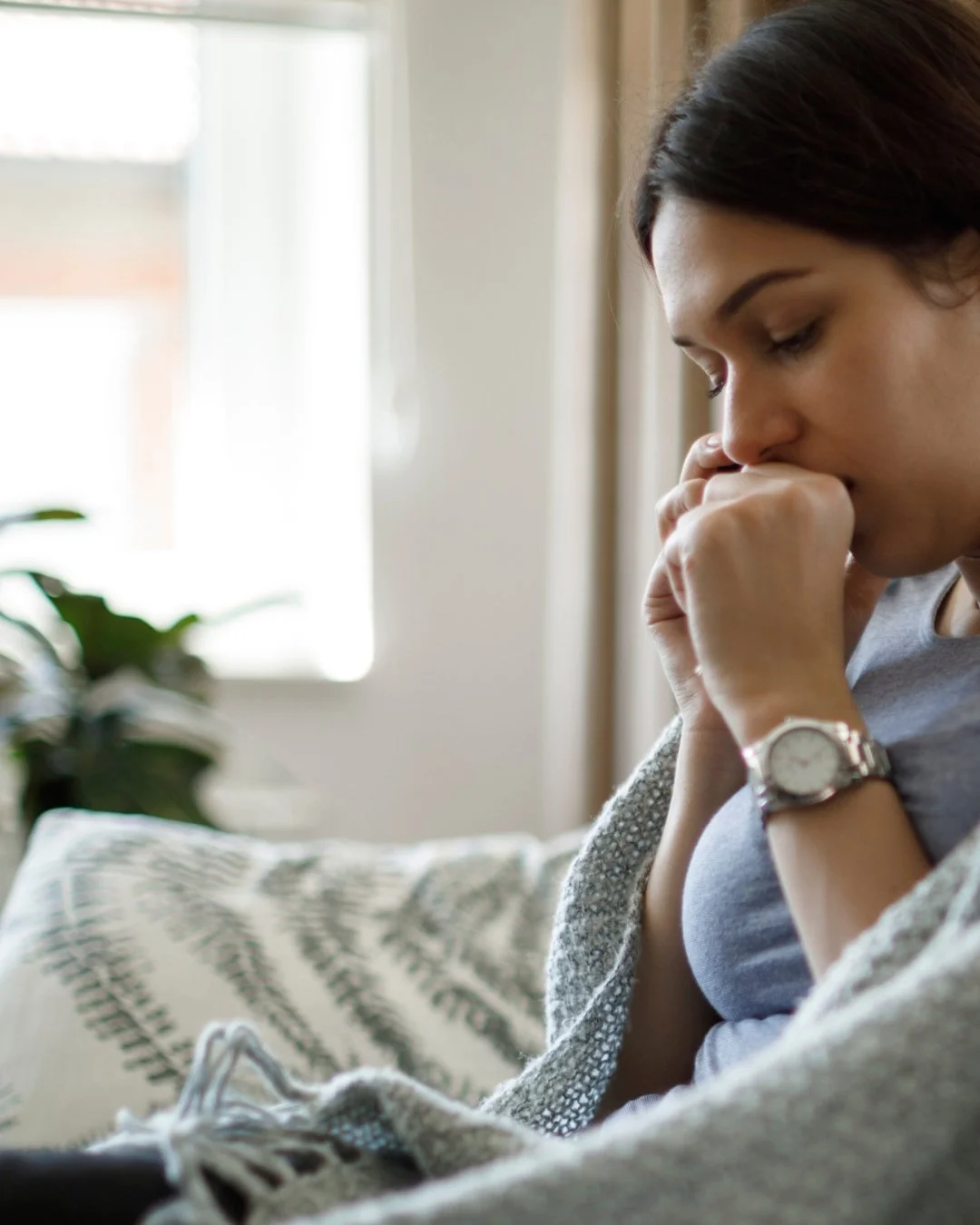
“Is there anyone out there, ‘cause it’s getting harder and harder to breathe….”
-Maroon 5
I’m writing this fresh off an Emergency Department visit in the wee early hours of the morning, where I am now considered a repeat offender for asthma-related visits because my asthma is not “well-controlled”. Gotta love how traumatized bodies get labeled. rolls eyes I debated for nearly four hours before even committing to go because my family, including my 3.5 year old, were all deep in sleep, and because I, locked into a complex history with my lungs and struggling to breathe, could not make a rational decision.
The nursing staff and doctor were kind. The time commitment was arguably the best I’ve ever experienced (only 3 hours from leaving home to leaving my hospital gown behind?! THE WONDER). I got a breathing treatment and the prescriptions I requested (steroids to combat the chronic inflammation and inhaler refills).
But what I actually needed was understanding of how my experiences with trauma in the past drives this pattern in my present body. What I need is a different kind of medicine.
A different kind of container than the American Healthcare System. A container that allows me to be an anomaly, a frayed nervous system, a grieving trauma survivor.
The literature doesn’t see me as an anomaly, however. It consistently reflects a link between asthma and adverse childhood events (ACEs), including childhood sexual assault. What it’s not doing a great job of is helping me, and others, understand WHY. It’s not currently giving what we in the biz call a “mechanism of action”. What series of processes get triggered by the body receiving trauma that lead to bronchial constriction and other asthmatic symptoms? This is the question I’m trying to answer.
And when I can’t find answers within conventional medicine sources, I look elsewhere.
In this particular case, YouTube (gasp).
Look, it’s not my fault. I came home from the ER, medication in hand, determined, excited even, to feel better. But after just 20 hours of being home, I found myself unable to stop coughing. For several hours. Back-to-back coughing, barely a full breath between.
The lack of oxygen intake. The aching accessory muscles. The inability to sleep. It starts to mess with you. I was literally pulling my hair out with frustration.
Ok, I thought, what did they do back in the day for asthma? They turned on a hot shower. I can do that. I headed to the bathroom and cranked the dial to hot, closed the door, sat down near the cascading water to catch the most steam. While doing that, I opened YouTube and looked for a meditation or something to help calm me. I specifically looked for meditations for asthma.
What I found was acupressure.
Like acupuncture, acupressure utilizes what they call “meridian lines” in the body (you can google the map if you’re super curious) that correlate with systems, organs, and energetics. Stimulating them is meant to clear stuck energy, improving the body’s ability to self-correct. The videos I found gave me several points that might help alleviate an asthmatic attack and, considering I was just applying pressure and not likely to do more harm, I decided to try.
The first person suggested pressing on the small divet at the base of my throat, that little half-moon-shaped space where the sternum ends and the soft, tender part of the throat begins. The throat chakra. I did, and reader, it was miraculous. After the first minute or so, the cough impulse was still present but I could get breaths in between. At the end of three minutes, the duration the video suggested, I had stopped coughing.
I moved to the other points, rotating between them, over and over again. Eventually I was able to turn off the shower and move gingerly toward the bed. I kept expecting every move, every change of position, to set off another wave of coughing. But it didn’t. And, finally!, I fell asleep.
The literature doesn’t exactly offer glowing reviews of acupressure for asthma relief. Not enough randomized control trials (RCTs) they claim. It’s even less complimentary about finding advice on YouTube. But I, like many of you, was desperate. And when the answers that are provided aren’t adequate, we look for help anywhere we can find it.
What this experience helped me to better understand about myself is that my experience with asthma is part physiological (spontaneous or triggered bronchial constriction) and part “other” (nervous system, energetic, etc). The first needs medication and will respond to that; the latter needs something else. And in this particular case, in needed some acupressure.
There is fear of liability in sharing this with you, as some in the naturopathic medicine world have misused natural modalities and dismissed the need for and urgency around medication. That’s not my intention here. Medication in acute situations and as daily maintenance is really important. Where trauma is a contributing factor, other modalities must be considered IN ADDTION TO. After all, the more tools we have in the toolbox, the more empowered we are to move through challenging health scenarios.
If you are a trauma survivor who struggles with asthma and other respiratory concerns:
Take your medications as prescribed.
This can’t be emphasized enough. So many acute issues can be prevented with regular and consistent medication. This is NOT a situation you want to diy; make sure you have open communication with your care team about the right course of action here.Connect with herbal allies.
Adaptogens and nervines are something I recommend for all trauma survivors, but for those with asthma, an herb from Traditional Chinese medicine also has promising effects. One of the concerns with asthma, especially allergic asthma, is how characters in the immune system, such as eosinophils, can distort and change lung tissue (a process we describe as fibrosis). Schisandra chinensis has constituents that actively work to repair this tissue, and with promising results. We only have studies with rat models because they need to do biopsy of lung tissue to show the progress of healing, and that gets real unethical in human trials (we can also talk about the ethics of animal studies and I’m RIGHT THERE WITH YOU). In addition to animal studies, we have the reliability of indigenous wisdom that says this herb is deeply supportive (disclaimer: please don’t initiate herbal interventions without consultation; herbs, like pharmaceuticals, have a window of therapeutic value and some can do damage).Protect from environmental triggers, pathogens, etc.
With the increase of wild fires across North America due to the crushing effects of climate change, I want to encourage you to have filters (box fan + HEPA furnace filters that specifically filter for PM2.5 or smaller taped together make for great cheap options) available. Wearing masks is critical if going outside (when AQI is elevated) or being around large groups (this is the protection from pathogens piece) is necessary. Again, ones that can filter for really small particulate matter.Find someone to collaborate with in your healing journey.
It doesn’t have to be me, but having the right healing container is SO IMPORTANT. I’ve seen this with clients who’ve been in many “healing” spaces, but have never had one that was uniquely fit to their stage of healing, the type of emotional responses they’ve had to their trauma, the condition of the traumatic experiences they’ve endured, and what they need IN THIS MOMENT to move toward sovereignty. Trauma does complex things to our bodies and beings, which means you need an approach that honors that complexity.
To explore what it might look like to work together, schedule your complimentary fit check today.
Sources:
Chen, X., Huang, Y., Feng, J., Jiang, X. F., Xiao, W. F., & Chen, X. X. (2014). Antioxidant and anti-inflammatory effects of Schisandra and Paeonia extracts in the treatment of asthma. Experimental and therapeutic medicine, 8(5), 1479–1483. https://doi.org/10.3892/etm.2014.1948
To pee or not to pee
Chronic childhood sexual assault may have long-term effects on the function of the lower urinary tract. Issues such as urinary frequency, retention, incontinence, and urgency that don’t respond to conventional treatment may point to deeper underlying issues.
The undeniable link between trauma and lower urinary tract symptoms
It was a strange pattern to uncover.
Wake in the night, coming out of a hard sleep confused and foggy, conscious of only one thing: I’m picking my nose.
Sometimes really aggressively. Picking my nose, with no objective.
As I slowly make my way to consciousness, I notice something else: I have to pee.
I stumble to the bathroom, then back to bed, and sleep (sometimes, but that’s an anecdote for the sleep convo).
Over and over, most nights of the week. Wake, pick, pee. For months, years. I can’t really say. And it wasn’t really until after my trauma memories started surfacing that I realized the two were even related. That picking my nose was a work-around. My body had shut down signaling from my pelvis, leaving my bladder to fill without the normal messages to tell my brain: hey! We gotta gooooo. So my body mobilized my finger to reach for my face and scratch me awake.
So brilliant, when you really think about it. How creative our bodies can be, compensatory.
But it didn’t answer my deeper question: why?
I’ve always had issues with urinating. Weird things, like having to pee reallllyyyy bad on a road trip, rushing to the back of the highway gas station, so relieved to find no one else had beat me there. Only to sit down on the toilet and….nothing.
My brain begged, pleaded, with my bladder to empty. Crying with the discomfort, quickly turning to pain. But it stayed stubbornly full, not even a drip drop falling into the toilet below. How I longed to hear a tinkle that never came.
And so many more stories like this one.
The bladder is an organ with its own unique story to tell. It’s tucked into the lower part of the pelvic bowl, sitting just in front of the uterus for those with that reproductive set-up, which is why many pregnant people pee more frequently and may even feel little kicks on the bladder (for me these felt like little lightning zings). The bladder is fed from two long tubes that drain from the kidneys, the main filter system for electrolytes, blood glucose, and other minerals. All unwanted items get added to the solution we eventually call urine and sent down the ureter tubes for storage in the bladder.
Like other internal organs, the bladder is composed of smooth muscle. The lining, however, is made of urothelium, or “transitional epithelium”, which is specifically designed to expand and contract, while still maintaining its shape. This means the bladder can fill with urine because the muscle stretches and allows more space. After emptying, it shrinks back to original volume.
Neurologically, the regulation of the bladder is incredibly complex. Sensors in the epithelium help communicate fullness, while the sympathetic nervous system helps to constrict the muscles surrounding the ureter, keeping you from peeing your pants while driving on the highway. As you find your way to a bathroom and let out a sigh of relief, the parasympathetic nervous system steps in and allows for release and relaxation.
One of the most important players in all of this, and especially in those with a traumatized body, are the neurotransmitters.
If you can, imagine the nervous system operating like electricity lines, the nerves flowing from the spinal roots just like the wires that cross your yard, flowing out from the poles near the street. In the body, nerves extend out just close enough to the receptors without touching, just like the electricity comes right into your home but waits, at the sight of the outlet, for you to connect to it when you’re ready.
When the timing is right and the communication is ready to be received or sent, the neurotransmitters are released and find the receptors they bind to. The neurotransmitters act as a “plug” essentially, connecting the communications from the nervous system to the muscles at the right time.
In other words, nothing happens without a neurotransmitter.
Just as nothing happens unless that appliance is plugged in.
Enter acetylcholine, one of the main neurotransmitters in this whole process. Acetylcholine works directly and indirectly, on a variety of processes that include bladder muscle relaxation. And acetylcholine has a unique relationship with cortisol, the main stress hormone released in response to traumatic experiences. While acetylcholine has the ability to prompt cortisol release from the adrenal gland, chronic elevations of cortisol (such as what happens when the body is feeling constantly under threat) actually suppresses acetylcholine release.
What does this mean?
For starters: experiences of chronic trauma can dramatically interrupt the system that keeps us peeing.
A study done with women between the ages of 18-60 who had been diagnosed with PTSD due to childhood sexual assault seems to correlate this relationship. All participants in the study had been admitted to a psych ward with increasing levels of dysfunction in day-to-day activities and their participation in the study was voluntary (I, personally, find this to be very important; they had autonomy which is not something people get in psych wards very often). They were assessed specifically for lower urinary tract symptoms—urgency, frequency, nocturia (increased frequency of peeing during the night), retention, and incontinence—and found direct relationship to severity of abuse and severity of symptoms. Suggesting not only that childhood sexual assault has a direct impact on our urinary systems, but also that the severity of experiences (including duration) can actually make symptoms worse.
This study also introduced another concept I found really interesting: expression suppression. I hadn’t heard this phrase before, but understand it to describe how a survivor might have been forced to keep their trauma hidden, oftentimes from themselves as much as others. Examples include but are not limited to: not being allowed to cry if something hurt, not allowed to tell others what happened, receiving more assault if any type of “complaining” happened, etc.
With the women in the study, the authors found a strong history of expression suppression in each participant. It was so present they went so far as to suggest that “ES may play a role in modulating physical symptoms and markers of health”. To me this validates and affirms what many of us already know: that the trauma was just one part of the injury, with our inability to speak or express how we felt about the trauma being the other.
For those of us with urinary symptoms, it may also explain why conventional approaches to treatment aren’t affective on their own. We need unique healing containers that provide relief of symptoms while also addressing the underlying healing of the pathways directly impacted by our trauma.
To see if working with me could be the healing path you’re looking for, schedule your complimentary Fit Check today.
Sources:
Handelzalts, J. E., Tevet, M., Padoa, A., & Shlomi, I. (2025). Urinary symptoms in sexual abuse survivors with severe post-traumatic morbidity: the impact of emotion regulation strategies. European Journal of Psychotraumatology, 16(1). https://doi.org/10.1080/20008066.2025.2510726
Yoshimura, N., & Chancellor, M. B. (2003). Neurophysiology of lower urinary tract function and dysfunction. Reviews in urology, 5 Suppl 8(Suppl 8), S3–S10.
Coming soon!
Check back soon + often for writings that blend research with personal reflections.