By Dr. Christie Wylde
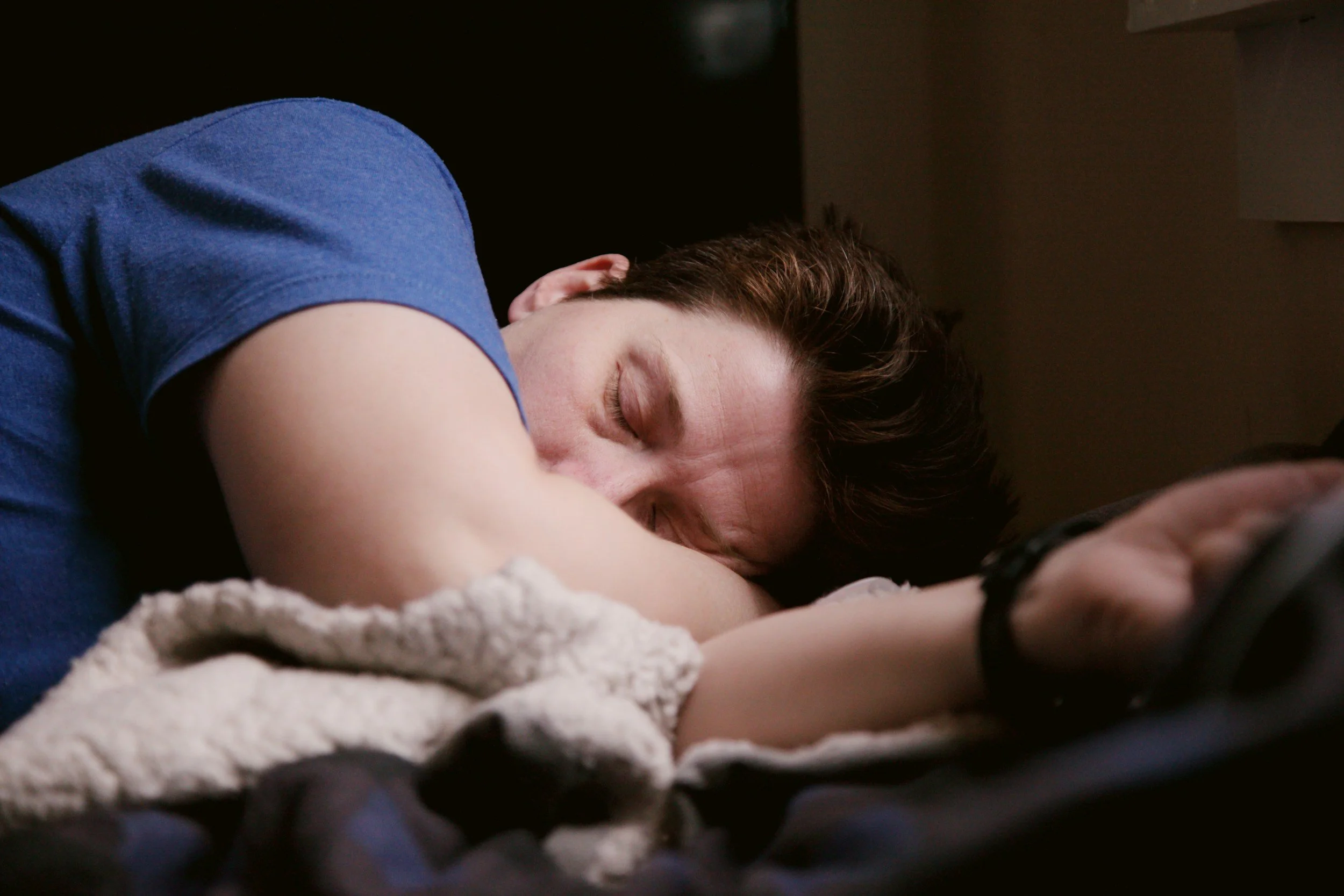
I’ve always had complicated situationship with sleep. As a kid I struggled to sleep when I was supposed to and to stay awake when I was supposed to. A joke evolved over time that I could sleep anywhere, and without any additional context for what was happening, I laughed along.
Afterall, it was funny that I could fall asleep in the bow of a speed boat as it bumped over the choppy waters of the Gulf…right?
During the day, fatigue would crash down on me, seemingly from nowhere, and I would feel myself sink into a sleep state, as if gravity herself refused to let me be upright any longer. It could happen anywhere: the school bus, English class, driving at full speed down the freeway (don’t worry, I pulled off on more than one occasion to sleep on the side of the road). I only needed about 20 minutes, then I’d be good to go again.
My teachers and peers took turns poking fun at this, with one English teacher who will go unnamed calling me the “sleepiest child she’s ever met.” And a bunch of bandmates putting things in my mouth as I was passed out on the way to a competition, snapping a pic, and making old-school posters of my humiliation on the Xerox.
At night, I’d wake in the darkness, eyes wide, thoughts raring to go. My body would refuse to come back to a restful state, often for 2-3 hours. Sometimes more. Sometimes I’d have so much energy I’d have to get up and do something, like completely organize a closet or watch a movie, to feel tired again.
As an adult, I tried every sleep aid under the sun: melatonin, warm baths before bed, chamomile tea, the occasional Benadryl. I finally tried cannabis and that was definitely a gamechanger. The only thing that has seemed to work is CBD + melatonin + lemon balm combo. The CBD calms my physical body, the melatonin supports the ability to go to and stay asleep, and the lemon balm is a nervine that can support anxiety.
Like I said: complicated.
Since the recovery of my trauma memories and the likelihood that the trauma happened at bedtime, I came to associate my sleep issues with these experiences. Still, that didn’t prepare me for what I would find in the literature.
Every article I read operated on a clear understanding that PTSD and C-PTSD negatively affect sleep. All those years of enduring casual harassment and bullying about my sleepiness, scientists were observing and publishing data explaining this phenomenon.
It was, and has been for a long time, common knowledge.
But no one told me.
There is even exploration that sleep disturbances can be a leading factor in whether or not someone who experiences a traumatic event will develop PTSD.
The science of sleep is complex. It’s sensitive, relies on a complicated network of nervous system signals and hormonal interactions. Which makes it really susceptible to events like trauma, and therefore really hard to figure out how to right the ship. Which could explain why patients and practitioners alike are often at a loss when the usual suspects, such as sleep aids and sleep hygiene, don’t shift a traumatized body’s sleep patterns.
The main players in this dance are the pineal gland and the parasympathetic nervous system. The pineal gland is a tiny member of the endocrine system that sits in the center of the brain and produces melatonin. You may have heard of this as a potential sleep aid. Melatonin is a hormone that is produced and released as the light fades near the end of the day. It’s primarily responsible for sleeping feelings we get as the sun sets. If you’ve ever gone camping or spent time away from “unnatural” light—street lamps, house lights, etc-- you know exactly what I’m talking about.
As the sun rises, melatonin production slows and then stops. Lingering melatonin molecules are broken down and not replace, and our bodies start to feel awake again. The light hitting our eyes also triggers the production and release of cortisol, which peaks about an hour after waking, giving us the jolt we need to start our day. Cotisol are in an inverse relationship; increasing melatonin leads to decreasing cortisol, and vice versa.
The parasympathetic nervous system, our other focus when it comes to sleep, is commonly referred to as “rest and digest” because of its ability to facilitate both sleep and digestion. Because trauma can severely disrupt our sense of safety, shifting into a parasympathetic state is extra challenging.
In contrast, the sympathetic nervous system is referred to as “fight or flight”; it shortens our breath, raises our heart rate, releases hormones to keep us alert, and slows or even stops digestion to save energy. The sympathetic state is highly aroused in trauma and can stay elevated long after a threat is gone.
The question raised here: how can we work with these parts of our bodies to help shift sleep patterns?
Here are some strategies I’ve found helpful, but remember every person is different. What works for me or your friend or that wellness influencer on tiktok, may not work for you. This is also what I would consider to be in the “slow medicine” bucket: it will take TIME to see the effects, so be patient.
Increasing melatonin
Move more closely in alignment with the rhythms of the earth. Decrease lights and screen exposure in the evening, allowing the eyes to experience more darkness before attempting sleep.
Supplement responsibly (ie. Consult a practitioner and NEVER follow internet advice for dosaging; use with extreme caution in children); this can certainly help fill in gaps of production that may be permanently disrupted.
Shifting into a parasympathetic (“rest & digest”) state
Have a set sleep and wake time, using a sunrise alarm if necessary; this helps the body experience safety through predictability, which can translate into better sleep over time
Breathwork: inhaling for a shorter count with an extened exhale has been shown to tone the parasympathetic fibers of the vagus nerve, which connects to the heart, diaphragm, and upper GI tract. Inhaling to a count of 4 and exhaling to a count of 5-7 can bring blood pressure back into a functional range, slow the breath rate, calm a racing heart, and stimulate digestion, allowing the body to experience rest and, eventually, sleep. Try this just before bed and practice daily for best results, starting with 5-10 minutes.
Cortisol regulation
Cortisol is a WAKE UP hormone, best utilized in the first moments after waking and/or when a threat is being posed. For survivors who endured trauma during the night, cortisol might be programmed to peak while you’re sleeping. To help reset this, expose your eyes to natural light first thing in the morning. Accompanied by an outdoor walk, this can really help retrain our bodies to want cortisol when it’s best utilized. Just a note that this took about a year to see a real difference. Like I said, SLOW medicine.
Herbal allies
Nervines are a class of plant allies that specifically focus on modulation and calming of the nervous system, which can support rest and sleep. I’m sure you’ve heard of chamomile as one such ally, but there are many others. Working with a practitioner, such as myself, can help you navigate the choices and find the ones that work best for you.
For more on this topic, check out my podcast that exclusively serves survivors of SA, WE ARE NOT BROKEN.
To explore working together to address your sleepytime needs, book your FREE 30min consultation today.
Citations:
Rebecca C. Cox, Alexa N. Garcia, Sarah C. Jessup, Sarah E. Woronko, Catherine E. Rast, Bunmi O. Olatunji, Subjective Sleep Disturbances in Sexual Assault Survivors: Associations With Trauma and Posttraumatic Stress Disorder Symptom Severity, Behavior Therapy, Volume 54, Issue 5, 2023, Pages 863-875, ISSN 0005-7894, https://doi.org/10.1016/j.beth.2023.03.005.